XRA’S CEO MODERATES PANEL ON AI AND XR's CONVERGENCE AT SCSP AI+ EXPO
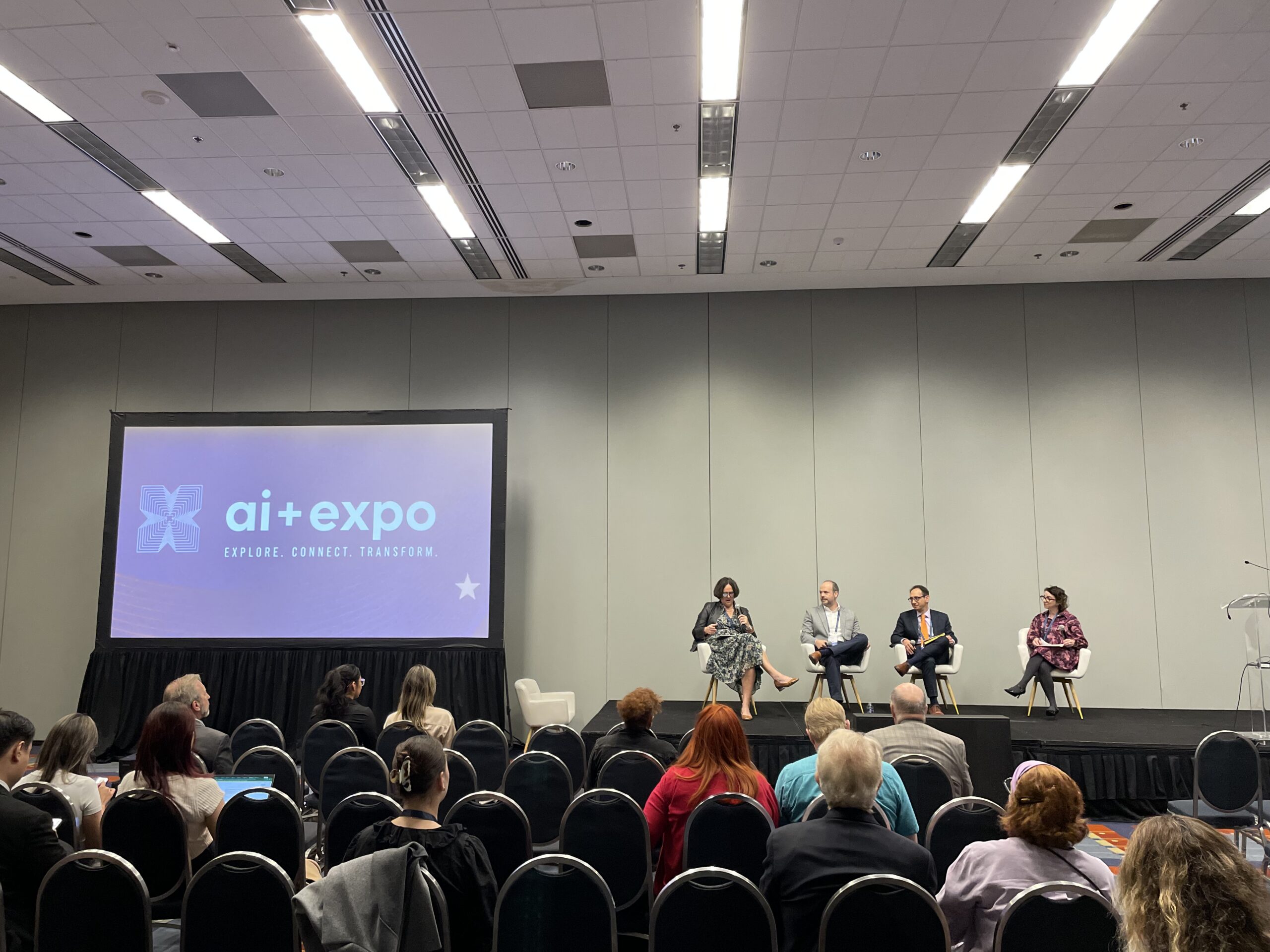
Washington D.C. – On May 8, XRA CEO Liz Hyman moderated, “How XR is Converging with AI to Power the Future of Human-Centered Computing” at the SCSP AI+ Expo. Hyman was joined by Dena Feldman, Meta, Andres Castrillon, Qualcomm, and James Green, Google, for a discussion on how artificial intelligence and extended reality are converging to reshape human-centered computing.
The conversation covered where AI-powered wearables and spatial platforms are gaining real traction today, and what still needs to happen to scale those gains. Feldman opened by making the case for smart glasses as a natural home for AI, arguing that the form factor lets people engage with AI in the world around them rather than through a phone or laptop screen.
Castrillon added that expanding on-device AI capability is central to making wearables genuinely useful, particularly in areas where network connectivity is inconsistent. Green described how platform-level software can now supply spatial context without requiring a stack of individual applications, pointing to this as a meaningful shift in how developers are approaching the space.
The panel spent time on multimodal AI, with Feldman noting that inputs like wrist and finger movement are opening up more natural ways for people to interact with wearable systems. The group agreed that getting AI to interpret physical surroundings accurately, including where a user is looking and how they are moving, is where the most interesting technical work is happening right now.
On applications, Castrillon pointed to manufacturing and workforce training as areas where XR is already in use at scale. He cited Walmart’s use of immersive environments to prepare employees for high-volume shopping scenarios as one concrete example. Green highlighted opportunities in healthcare and education, including tools designed for users with low vision, and noted that his team’s focus is on giving educators and enterprise developers the platform capabilities to build those applications themselves.
Policy came up throughout the discussion. Panelists pointed to the Immersive Technology for the American Workforce Act as a step in the right direction, particularly its focus on directing funding toward underserved communities. Several speakers raised accessibility as a concern, noting that without deliberate attention to who these tools are designed for, the technology risks widening existing gaps rather than closing them. The group called for federal frameworks that give industry enough certainty to invest without locking in requirements that do not fit a fast-moving space.
The SCSP AI+ Expo brings together leaders from government, industry, and research to discuss emerging technology and U.S. competitiveness.