THE MISSING LAYER IN WORKFORCE DEVELOPMENT
In our last post, we explained how workforce development begins with awareness. Students aren’t able to pursue opportunities they don’t know exist, making job exploration impactful to a student’s career journey long before they enter a training program or future job.
But awareness is only the first step, and immersive technology is creating opportunities to bring those pieces closer together.
The conversation around workforce development has become increasingly focused on skills, especially as AI disrupts today’s entry-level and white-collar professions. How can we ensure people are prepared for jobs in advanced manufacturing, healthcare, energy, and the skilled trades? How do we address labor shortages that continue to affect industries across the country?
These are important questions, but they assume that students have already decided what path they want to pursue. In reality, workforce challenges can emerge before training even begins. People may know a career exists, but still lack the confidence to pursue it. Other barriers could include not being able to visualize what the work actually looks like, whether it aligns with their interests, or whether they can see themselves succeeding in that environment.
This is where immersive technology is beginning to play a different role. XR has proven effective at helping learners build technical skills in safe, controlled environments in addition to providing opportunities for users to explore a day in the life.
Transfr, an XRA member company, is helping address that challenge through immersive career exploration and workforce readiness experiences. Transfr spans the classroom to career pathway – bridging career awareness and exploration with industry-aligned job training on a learner’s pathway to employment. Through its platform, learners can delve into careers across industries ranging from healthcare and manufacturing to logistics, construction, and energy. They can see what the work involves, understand workplace expectations, and begin building confidence before stepping into a classroom, training center, or job site. With a library of over 300 unique career simulations and a multimodal career exploration solution, Transfr provides an integrated experience across mobile, virtual reality, and curriculum resources.
The significance of this approach extends beyond individual learners. Through partnerships and partner outreach, Transfr is operating at the intersection of education, workforce development, and industry demand, helping users explore pathways while helping communities address talent shortages in critical sectors.
Why This Matters Now
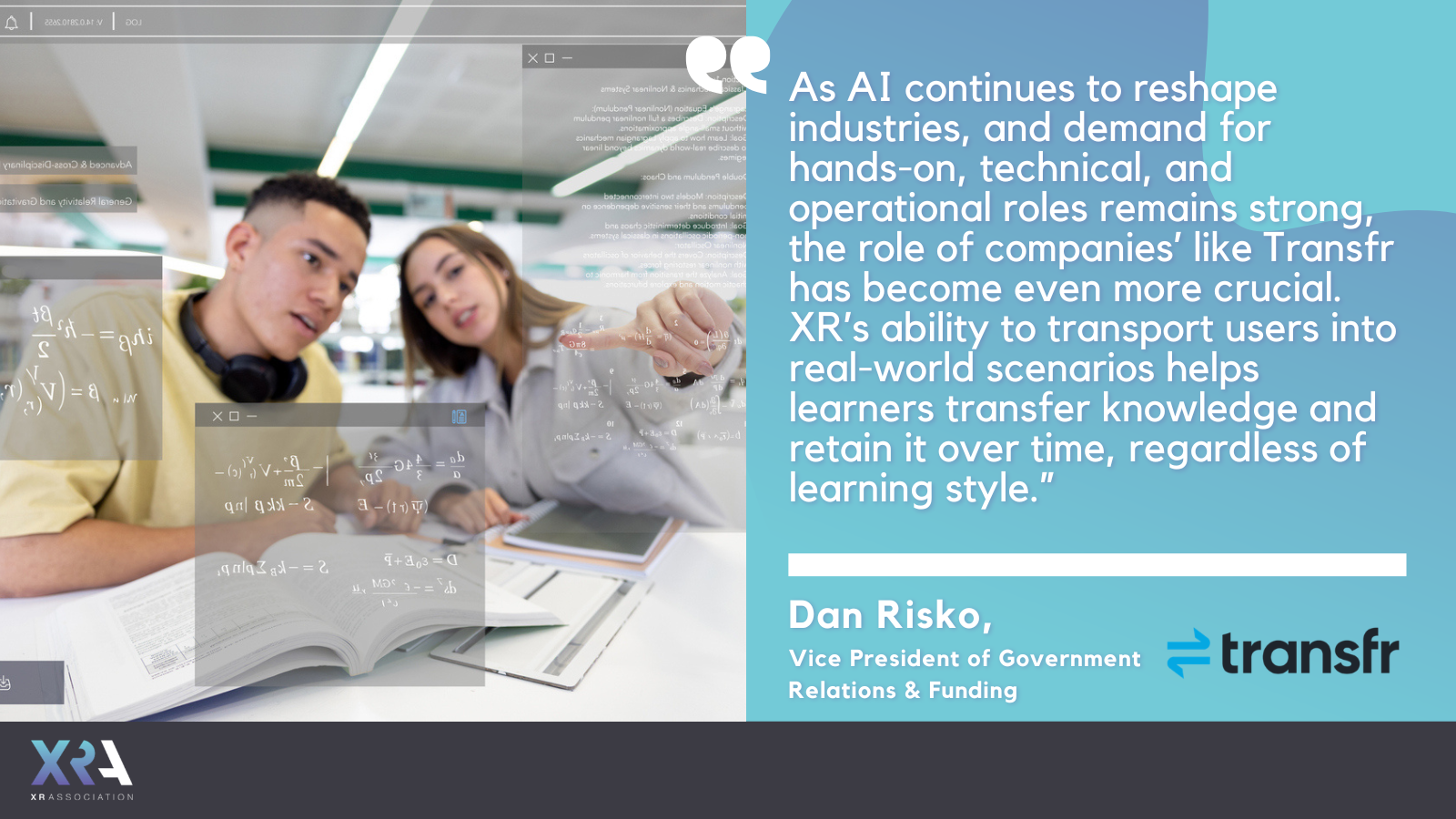
As AI continues to reshape industries and demand for hands-on, technical, and operational roles remains strong, the role of companies like Transfr has become even more crucial. XR’s ability to transport users into real-world scenarios helps learners transfer knowledge and retain it over time, regardless of learning style.
That is why legislation like the Immersive Technology for the American Workforce Act matters. The bill recognizes that immersive technologies are becoming workforce infrastructure and are necessary to expand professional development opportunities. By supporting XR deployment through workforce development programs, community colleges, and technical education pathways, the legislation would help expand access to tools that connect learners to opportunity and prepare them for success.
The future of workforce development is not simply about teaching skills faster. Transfr’s work demonstrates what meaningful exploration and training can look like in practice. To learn more, visit https://transfrinc.com/.